
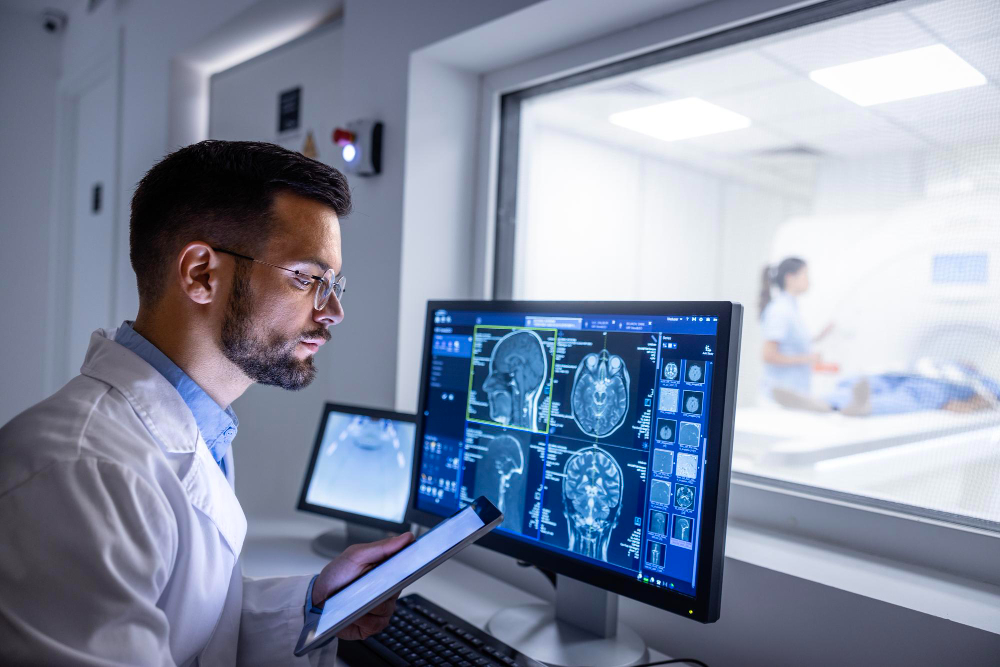
Introduction to AI-Based MRI
AI-based MRI is changing how doctors find health problems. This advanced MRI technology uses artificial intelligence to help scan your body. As a result, it can spot issues earlier and more accurately. According to the World Health Organization (WHO), early detection is key for better treatment. With AI-based MRI, doctors can now see more details than ever before.
What Is AI-Based MRI?
AI-based MRI combines traditional MRI scans with smart computer programs. These programs, called artificial intelligence, learn from many images. Therefore, they help doctors find patterns that may be hard to see. For example, AI can highlight small changes in tissues or organs. This makes it easier to spot early signs of disease.
How Does AI Improve MRI Scans?
AI improves MRI scans in several ways. First, it helps create clearer images. Next, it can reduce the time you spend in the scanner. In addition, AI can compare your scan to thousands of others. This helps doctors find even tiny problems. Because of this, AI-based MRI often leads to faster and more accurate results.
Benefits of AI-Based MRI for Early Detection
Early disease detection saves lives. With AI-based MRI, doctors can spot health issues before symptoms appear. For instance, AI can find small tumors or early signs of stroke. As a result, treatment can start sooner. This often leads to better outcomes and less stress for patients.
Common Health Conditions Detected by AI-Based MRI
AI-based MRI helps find many health problems. For example, it is used to detect:
Because AI can spot tiny changes, it often finds problems that older methods might miss. This means you get the right care sooner.
Safety and Accuracy of AI-Based MRI
AI-based MRI is very safe. It does not use harmful radiation. Instead, it uses strong magnets and radio waves, just like regular MRI. According to the Centers for Disease Control and Prevention (CDC), MRI is a safe test for most people. In addition, AI makes the results more accurate. Studies in medical journals show that AI can match or even beat human experts in reading scans.
What to Expect During an AI-Based MRI Scan
During an AI-based MRI scan, the process is much like a regular MRI. First, you will lie down on a table. Then, the table slides into the scanner. The machine makes loud noises, but you will get earplugs or headphones. The scan usually takes less time because of AI. After the scan, the images are checked by both the AI system and a radiologist. This double check helps ensure accuracy.
The Future of AI in Radiology
AI in radiology is growing fast. Soon, more hospitals will use AI-based MRI for many health checks. As technology improves, scans will get even quicker and more detailed. In the future, AI may help doctors find rare diseases or track how well treatments work. Because of these advances, patients can expect better care and faster answers.
Conclusion: Take the Next Step
AI-based MRI is making health checks smarter and safer. It helps doctors find problems early and treat them quickly. If you need an MRI or have questions about advanced MRI technology, talk at Clarivue Scan Pvt Ltd. They can guide you to the best care for your needs.