
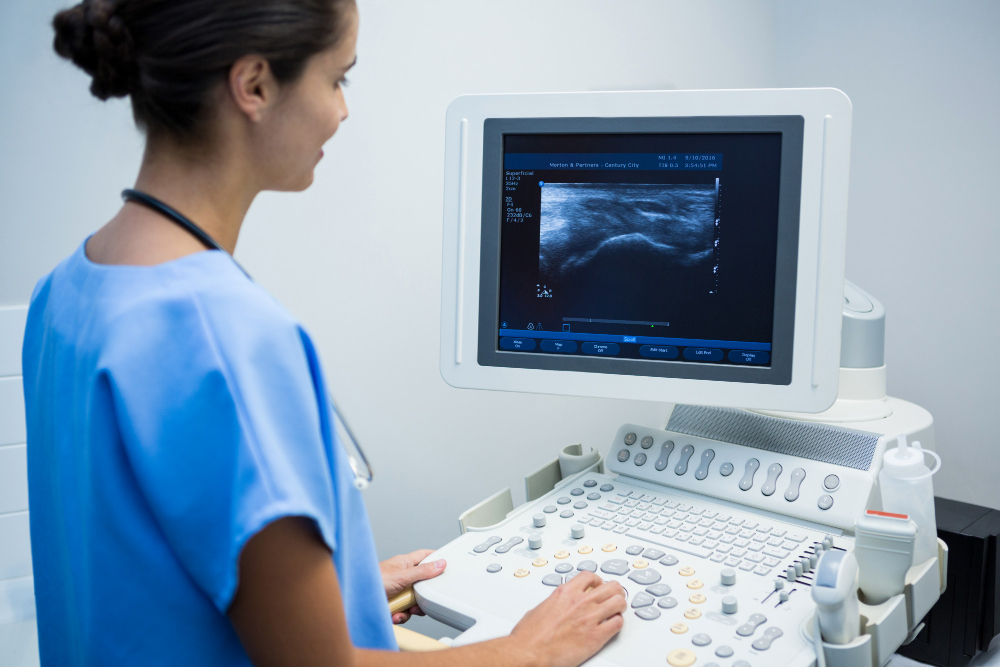
Introduction to 5D Imaging
Medical imaging has come a long way. Today, many clinics offer advanced options like 5D imaging. In fact, 5D imaging benefits both patients and doctors in many ways. But what is 5D imaging? Traditional ultrasound uses sound waves to create images of the inside of the body. However, 5D imaging adds new layers of detail and clarity. For example, it combines real-time 3D images with color and movement. As a result, it helps doctors see more than ever before. This technology is one of the latest ultrasound innovations in healthcare.
How 5D Imaging Works
5D imaging uses advanced imaging technology to capture detailed pictures. First, a special probe sends sound waves into the body. Then, these waves bounce back and create a 3D image. Next, the system adds extra features, such as color and motion. Because of this, doctors can see moving images in real time. For instance, they can watch a baby’s heartbeat or facial expressions. In addition, the images are clearer and easier to understand. This process uses safe, non-invasive methods, just like regular ultrasound.
Key Benefits of 5D Imaging
5D imaging benefits patients and doctors in several important ways. Not only does it improve the quality of care, but it also makes the experience better for everyone involved. Here are some major advantages:
Common Uses of 5D Imaging in Medicine
5D imaging is used in many areas of medicine. However, it is especially popular in prenatal care. For example, expecting parents can see detailed images of their baby’s face and movements. This helps doctors check the baby’s growth and spot any issues early. In addition, 5D imaging is used in:
Many hospitals in large cities now offer 5D ultrasound as part of their advanced imaging technology services.
Safety and Reliability of 5D Imaging
According to the World Health Organization and other trusted sources, ultrasound is very safe. 5D imaging uses the same basic technology as regular ultrasound. Therefore, it does not use radiation. Instead, it relies on sound waves, which are gentle and non-invasive. Most people do not feel any discomfort during the scan. In rare cases, a person may feel slight pressure from the probe. However, there are no known long-term risks. Because of its safety and reliability, 5D imaging is used worldwide.
What to Expect During a 5D Imaging Procedure
Knowing what to expect can help you feel at ease. During a 5D imaging procedure, the steps are simple:
Most scans take less than 30 minutes. In many clinics, family members can join to view the images together.
Future Prospects of 5D Imaging
Researchers are always looking for new ways to use ultrasound innovations. For example, ongoing studies aim to make 5D imaging even more accurate. Some experts believe it could help spot health problems even earlier. In the future, this technology may be used in more fields, such as cancer care or heart health. As technology grows, 5D imaging benefits will likely expand, offering even more help to patients and doctors alike. Consult at Clarivue Scan Pvt Ltd.